
Jason Edworthy - Your Local Party Wall Surveyors Provider
Section 1 of the Party Wall etc. Act 1996 deals with new building works planned right at or near the boundary line between two properties.
If you or your client is planning to construct a new wall astride the boundary or up to it, Section 1 comes into play—and it’s essential to follow it properly to avoid disputes with neighbours.
Section 1 of the Party Wall etc. Act 1996 concerns the construction of a new wall at or near the line separating two properties.
It ensures that adjoining owners are notified before building work starts. The Act can help stop arguments. It also helps people have good relationships with their neighbours.
This section applies when:
In both cases, you need to give a Section 1 Notice to the owner of the property next to yours. You must do this at least one month before you start the work.
The neighbour can say yes, ask you to change something, or say no. If they say no, you might need a party wall agreement or have the wall inspected.
Why it matters:
If you do not follow Section 1, you can have legal problems. Without this legal document, things can slow down, or you may have to stop work. It is good to get this right at the start.
It will save you time. It will help keep your good relationships. It also allows the project to continue smoothly.
At Jason Edworthy, your local party wall surveyors provider, we help people who own homes, architects, and builders deal with Section 1 notices the right way. We make sure you follow all rules and feel at ease.
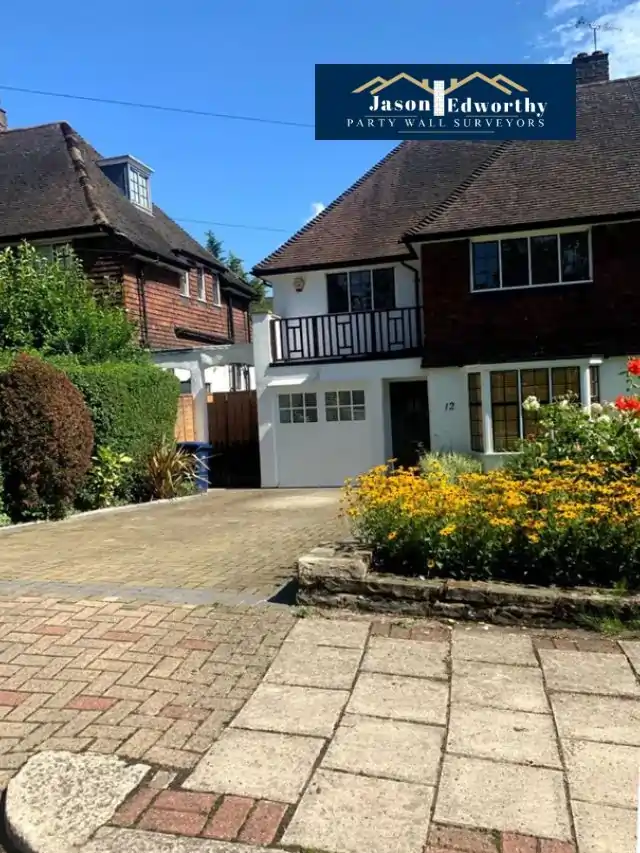
It depends on Section 1 of the Party Wall etc. Act 1996, you have the right of access access rights to build up to—or astride—the level of the land of the adjoining owner or the boundary line between your property and your neighbour’s under the Party Wall etc Act for the construction of the existing party wall, including the construction of the wall in pursuance of the Act, ensuring that you do not cause unnecessary inconvenience.
However, you must first serve a Section 1 Notice at least one month before starting the work.
If you’re building entirely on your land, right up to the boundary, your neighbour cannot legally stop you—though you still have to notify them.
However, if you want to build on the boundary line itself (known as a party wall), your neighbour’s consent is required. If they disagree, you can’t proceed with the shared wall, but you can revise your plans to build fully on your land instead.
Section 1 of the Party Wall etc. Act 1996 applies to both residential and commercial properties—but how it’s approached can differ depending on the type of development, complexity of the project, and the relationship with adjoining owners.
At Jason Edworthy, your local party wall surveyors, we tailor our guidance to the unique needs of each property type.
What’s the Same?
For both residential and commercial properties, the legal requirements under Section 1 of the Party Wall Act are fundamentally the same. Whether you’re building a home extension or a large commercial development, you must serve a formal Section 1 Notice if the proposed wall is to be constructed at or up to the boundary line.
In both cases, a minimum notice period of one month is required before any work can begin. Neighbours—whether homeowners or business owners—have the same legal rights under the Act and must be adequately informed of them.
If a dispute arises, the process is also identical: surveyors may be appointed to resolve the matter and issue a Party Wall Award, thereby moving the project forward fairly and lawfully.
Residential Properties
Commercial Properties
Getting Section 1 wrong—whether it’s a home extension or a commercial build—can result in delays, legal disputes, and extra costs.
That’s why architects, builders, and homeowners across the UK trust Jason Edworthy to manage notices properly and ensure compliance from the start.
Need help with a residential or commercial Section 1 Notice? Jason Edworthy, your local party wall surveyors provider, is here to guide you through every step—professionally and stress-free.